High Ground, Clear Head: What Japanese Mountain Culture Knows About Anxiety That No Bestseller Can Teach You
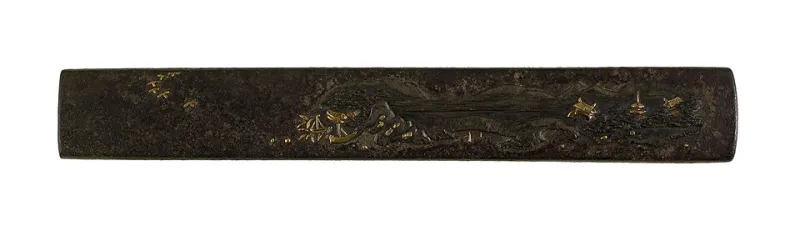
Photo: Anonymous (Japan)Unknown author, Public domain, via Wikimedia Commons
Somewhere between your third self-help book and your fifth productivity app, you probably started wondering if maybe the answer isn't more information. Maybe it's less altitude — or actually, more of it.
The Japanese concept embedded in the name Odaka points toward something quietly radical: that elevation, both physical and metaphorical, has always been one of humanity's most reliable paths to clarity. Long before wellness influencers discovered breathwork, mountain communities across Japan were practicing a version of stillness that required nothing more than going up.
And staying there long enough to listen.
What 'Odaka' Actually Means
The characters that form odaka (高田) translate loosely as "high field" or "elevated ground" — a place where the land rises to meet the sky. In traditional Japanese geography, elevated places weren't just scenic overlooks. They were considered sites of psychological and spiritual reset, locations where the noise of ordinary life couldn't easily follow you.
This wasn't mysticism for its own sake. It was practical. Communities living near mountains understood that people who regularly sought high ground came back different — calmer, more decisive, less reactive. The mountain wasn't doing something magical to them. It was removing something ordinary from them.
That distinction matters.
The Neuroscience of Getting Up There
Dr. Sarah Kline, a Colorado-based environmental psychologist who works with wilderness therapy programs, has spent years studying what happens to the brain in high-altitude natural settings. "We're not talking about the altitude itself," she's careful to clarify. "We're talking about the combination of factors that tend to come with elevation — reduced auditory stimulation, increased visual horizon, lower population density, and a shift in how the body regulates its stress response."
The research backs this up. Studies on attention restoration theory, originally developed by Rachel and Stephen Kaplan at the University of Michigan, suggest that natural environments — particularly vast, open ones — allow the prefrontal cortex to essentially take a break from the constant directed attention that modern life demands. When you're not actively filtering traffic noise, notifications, and social cues, your brain's executive function gets a chance to recover.
High places tend to accelerate this process. The sheer scale of a mountain view forces a kind of perspective shift that's hard to manufacture in a therapist's office. "There's something about being physically small in a large landscape," Kline notes, "that helps people recalibrate what actually requires their anxiety."
In other words, your inbox looks a lot less urgent from 8,000 feet.
Why the Self-Help Shelf Keeps Coming Up Short
American anxiety management has become a multi-billion-dollar industry built largely on cognitive frameworks — reframe this thought, practice that habit, journal these prompts. And those tools aren't useless. But they operate almost entirely in the realm of the mind, asking the anxious brain to think its way out of anxiety.
Japanese mountain philosophy takes a different approach. It doesn't ask you to think differently. It changes your environment until different thinking becomes natural.
Outdoor educator Marcus Webb, who runs high-altitude retreats in the Cascades and has studied Japanese satoyama (village-mountain boundary) traditions, puts it plainly: "American wellness culture is obsessed with hacks. Japanese mountain culture is obsessed with conditions. You don't hack your way to stillness. You create the conditions where stillness can arrive on its own."
That's the Odaka principle in practice. Not forcing calm. Not achieving peace. Positioning yourself somewhere that peace already exists, and then getting quiet enough to notice it.
The Retreat Effect — And Why It Lasts
High-altitude retreats, whether in the Japanese Alps, the Rockies, or the Adirondacks, tend to produce what researchers call "lasting behavioral change" at higher rates than most other wellness interventions. A 2019 study published in Frontiers in Psychology found that participants in nature-immersive programs reported sustained reductions in anxiety symptoms six months after the program ended — outcomes that outperformed comparable urban mindfulness programs.
Webb believes the durability comes from the physical memory of the experience. "Your body remembers being in that landscape. When you close your eyes and return to it mentally, the nervous system response is partially reproduced. You're not just remembering a nice view. You're re-accessing a physiological state."
This is why Odaka Camp's entire philosophy is built around experiences that live in the body, not just the mind. A patch on a jacket, a familiar scent, a specific song — these aren't just souvenirs. They're re-entry points to a state you've already been in.
Bringing the Mountain to Your Monday Morning
Not everyone can drive to the Cascades on a Tuesday. But the Odaka principle is more portable than it sounds. Here's how to build it into daily life:
Find your local high ground. It doesn't have to be dramatic. A rooftop, a hill in a city park, even a fire escape with a long view will do. The goal is horizon — visual space that lets your nervous system exhale.
Create an arrival practice. When you reach your elevated spot, resist the urge to immediately check your phone or start mentally processing your day. Spend the first two minutes just orienting — what do you hear, see, feel? This is the Japanese concept of ma (間), the productive pause before action.
Let the scale do the work. Look as far as you can see. Deliberately. The psychological research on awe suggests that even brief experiences of vastness reduce self-referential thinking — the mental loop that feeds most anxiety.
Return with intention. The Japanese mountain tradition isn't just about going up. It's about coming down changed. Before you leave your high spot, identify one thing you're leaving behind — a worry, a grudge, a decision you've been overthinking — and let the descent be a physical metaphor for releasing it.
The Stillness Was Always There
Here's the quiet truth that Japanese mountain culture has always understood and American self-help keeps accidentally obscuring: you are not broken. You don't need to be fixed. You need to be repositioned.
Elevation — physical, metaphorical, or both — has a way of doing that without requiring you to do much at all. The mountain doesn't care about your productivity score. It just asks you to show up, look out, and stay long enough for the noise to settle.
That's the Odaka principle. And you don't need a bestseller to teach it to you. You just need to find higher ground.