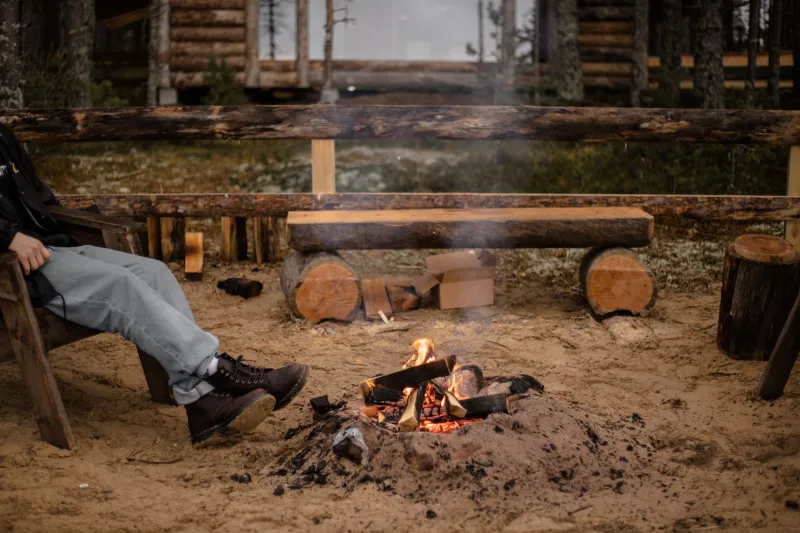
Inhale Camp: The Surprising Brain Science Behind Why One Whiff of Woodsmoke Can Wreck You Emotionally

You're standing in a hardware store in November, minding your own business, when someone lights a fireplace demonstration candle three aisles over. And suddenly — without warning, without permission — you're eleven years old again, wrapped in a flannel blanket, watching sparks drift up into a black sky above the tree line.
That's not nostalgia. That's your brain doing something genuinely wild.
Why Your Nose Is Basically a Time Machine
Most of our senses travel through a kind of relay system before they reach the parts of the brain responsible for memory and emotion. Sight, sound, touch — they all get filtered, processed, categorized. But smell is different. Olfactory signals travel directly to the limbic system, which is the brain's emotional core, and to the hippocampus, which handles memory storage. No middleman. No delay.
This is why a scent can hit you before you even consciously register what you're smelling. The emotional response arrives first. The recognition catches up a second later.
Researchers call this the Proust Phenomenon, named after the French novelist who famously described being overwhelmed by childhood memories after smelling a cookie dipped in tea. Scientists have confirmed that odor-evoked memories tend to be older, more emotionally intense, and more vivid than memories triggered by any other sense. They also tend to be tied to specific places and periods of life — particularly childhood and adolescence.
Which, for a lot of us, means camp.
Why Camp Smells Hit Harder Than Almost Anything Else
Think about the scent landscape of a summer camp. Pine resin warming in afternoon sun. Damp earth after a rain. Sunscreen layered over lake water. The particular combination of canvas, bug spray, and someone's forgotten damp towel that somehow smells like freedom. Woodsmoke from an evening fire, the kind that gets in your hair and you don't even care.
These aren't just pleasant smells. They're emotionally loaded ones, because they arrived during a period when your brain was doing serious developmental work. Adolescence and early childhood are prime windows for what neurologists call "first encoding" — the moments when an experience is stored for the first time, raw and unfiltered. Camp happens right in that window for most people, which means the smells of camp get laid down alongside feelings of belonging, freedom, identity formation, and genuine joy.
Decades later, those olfactory memories don't fade the way visual ones do. They stay sharp. And when triggered, they don't just remind you of camp — they can actually recreate some of the emotional state you were in when you were there.
The Case for Intentional Scent
Here's where it gets practical. If smell is the fastest route to an emotional state, then scent isn't just something that happens to you — it's something you can use on purpose.
Therapists who work with mindfulness and grounding techniques have long understood this. Certain scents can help regulate the nervous system, cue the brain toward calm, or anchor a person in a specific emotional place. Athletes use it before competition. Meditation practitioners use it to deepen focus. And increasingly, people who want to hold onto the feeling of a retreat or time in nature are using scent as a kind of emotional bookmark.
The practice is simple: identify the smells that carry the most emotional weight for you, and find ways to reintroduce them into your daily environment. This isn't about recreating camp exactly. It's about using scent as a bridge — a way to access a version of yourself that felt more present, more connected, more alive.
What to Actually Burn, Diffuse, or Wear
Not all pine candles are created equal. If you've ever bought a "forest" scented candle that smelled more like a cleaning product than actual trees, you know the gap between synthetic fragrance and the real thing. When you're trying to trigger a genuine memory response, authenticity matters.
Look for candles or essential oil blends that use actual plant-derived ingredients: cedarwood, fir needle, white pine, sandalwood, vetiver (which has an earthy, rooty quality that mimics forest floor), and juniper. Smoke-forward scents — those that include birch tar or guaiac wood — can approximate that campfire warmth without requiring an actual fire pit in your living room.
For a lake-air quality, coastal blends that include sea salt and driftwood notes can get close, especially layered with something green and resinous.
The goal isn't to fool your brain. It's to give it enough sensory information to do the rest of the work itself.
Building a Scent Ritual at Home
One of the things that makes camp so emotionally resonant is that it's full of ritual — the same sounds, the same rhythms, the same smells at the same times of day. Morning coffee with pine-damp air. Evening fire as the light goes orange. These repetitions teach your nervous system what to expect, and that predictability creates safety.
You can build something similar at home. Light a woodsmoke or pine candle at the same time every evening. Use a cedar-based room spray when you sit down to journal or read. Keep a small diffuser with forest notes running during your morning routine. Over time, your brain starts to associate those scents with the intentional, slower pace you're trying to cultivate — and the scent itself becomes a cue to shift into that mode.
At Odaka Camp, we think a lot about how to carry the stillness of the outdoors into ordinary life. Scent might be the most underrated tool for doing exactly that. It doesn't require a plane ticket or a week off work. It just requires paying attention — and maybe lighting something on your way to the couch.
The Smell of Who You Were
There's something worth sitting with here. When a scent takes you back to camp, it's not just transporting you to a place. It's showing you a version of yourself — one who was present, curious, unguarded, maybe a little braver than you feel right now.
That version of you didn't disappear. They're stored in the same place as the smell of pine and the sound of a screen door. And sometimes, all it takes is a candle and thirty seconds to find your way back to them.