The Hardest Part of Camp Isn't Being There — It's Coming Back
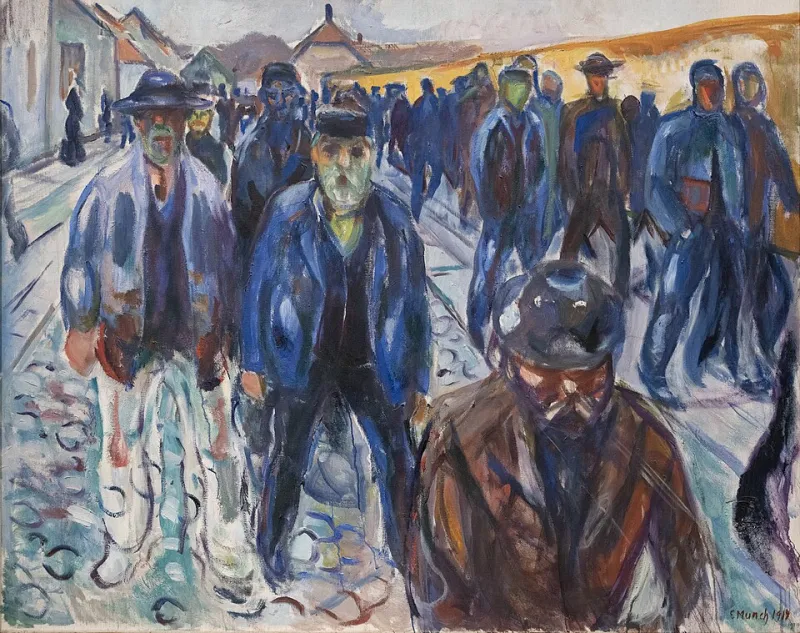
Photo: Gleb Simonov, Public domain, via Wikimedia Commons
You know the feeling. The drive home is quiet in a way that has nothing to do with the radio being off. Your phone has ninety-seven notifications and none of them feel real. Your bedroom looks the same as it did a week ago, and somehow that's the most disorienting thing of all.
The camp experience — or any genuinely transformative retreat — has a well-documented beginning and middle. What almost nobody prepares you for is the ending. Not the closing ceremony, not the goodbye hugs, not the last night bonfire. The actual ending: Tuesday morning, three days after you got home, when the feeling is already fading and ordinary life is pressing in from every direction.
This is the return problem. And it's more serious than most people realize.
What Researchers Call It
Psychologists who study transformative travel and intensive retreat experiences have a clinical term for the disorientation that follows: re-entry syndrome, a subcategory of what's more broadly known as reverse culture shock. It was originally documented in Peace Corps volunteers and international exchange students returning home after long stints abroad, but researchers have since identified it in shorter, more intense experiences — including wilderness programs, meditation retreats, and yes, summer camps.
Dr. Amy Chen, a clinical psychologist who works with adolescent wellness programs in the Pacific Northwest, describes it this way: "The brain doesn't experience time in the way we think it does. A week at a high-intensity camp can create neural patterns that feel as significant as months of ordinary experience. When you return to an environment that hasn't changed, there's a genuine mismatch — your internal landscape has shifted, but your external one hasn't. That dissonance is real, and it's uncomfortable."
For kids, this often looks like irritability, withdrawal, or sudden tearfulness that parents misread as behavioral regression. For adults, it tends to show up as a vague but persistent flatness — a sense that real life is somehow less real than the experience you just left.
Either way, it's not weakness. It's the cost of having been somewhere that mattered.
Why the Crash Happens
Part of what makes transformative experiences so powerful is their totality. At camp, or on a retreat, or during any immersive experience that pulls you out of your ordinary life, the environment is doing most of the work. The schedule is clear. The social context is simplified. The distractions are removed. You don't have to decide who you are in relation to your coworkers, your mortgage, your complicated family dynamics.
You just get to be the version of yourself that shows up when those things aren't in the room.
The problem is that version of yourself is real — maybe more real than the one who responds to emails and makes dinner and navigates rush hour. But your regular life doesn't have a script for integrating them. So the camp self and the home self collide, and the camp self usually loses. Not because it's weaker, but because it's newer and doesn't have the infrastructure yet.
This is what Japanese re-entry philosophy gets right that American culture tends to fumble: transitions require ceremony. They require intentional marking. You can't just walk back through the door and expect the growth to survive contact with the ordinary world without some kind of protection.
What Japanese Tradition Understands About Returning
In Japanese culture, the concept of kekkai (結界) describes a ritual boundary — a deliberate threshold between different states of being. Traditionally used in Shinto practice to mark sacred spaces, the underlying idea translates beautifully into modern re-entry psychology: transitions need to be honored, not rushed through.
Japanese pilgrims returning from the Kumano Kodo trail or other sacred routes historically observed a period of gradual re-integration — eating simply, speaking carefully, resisting the urge to immediately resume ordinary life at full speed. The return journey was considered as spiritually significant as the pilgrimage itself.
Modern wellness practitioners have adapted this thinking for secular contexts. The core insight remains: the way you come home shapes what you bring home with you.
Building Your Own Return Ritual
You don't need a Shinto priest or a week of contemplative silence. But you do need something more intentional than collapsing on your couch and scrolling Instagram until the feeling goes away. Here are practices that actually work:
The Slow Re-Entry Window: Give yourself a buffer before full re-engagement. If you get home Sunday evening, resist the urge to immediately catch up on everything. Treat Sunday night as still part of the experience — eat something simple, unpack slowly, go to bed early. Monday morning is soon enough for the world to have you back.
The Object Anchor: Identify one physical item from your camp or retreat experience and give it a specific home in your everyday environment. Not in a drawer — somewhere you'll see it. This isn't nostalgia. It's a neurological trick: visual cues associated with positive emotional states can partially re-activate those states. Your camp mug on your desk isn't decoration. It's a re-entry point.
The Three-Things Practice: Before you leave the experience, write down three specific things that changed for you — not lessons or takeaways, but actual shifts. "I realized I'm funnier when I'm not trying to be." "I slept better without my phone in the room." "I felt genuinely close to people I'd known for four days." Keep this list somewhere accessible. When the flatness hits, re-read it. Not to chase the feeling — just to confirm that it happened.
The 48-Hour Communication Pause: This one is harder but worth it. In the first 48 hours home, resist the urge to fully debrief the experience with people who weren't there. Not because it's a secret — because verbally processing a transformative experience too quickly can actually flatten it. The stories you tell in the first two days tend to become the only stories you remember. Give the experience time to settle before you start translating it.
The Re-Entry Conversation: Find one person — a fellow camper, a retreat participant, a close friend who gets it — and schedule a check-in for two weeks after you return. Not immediately. Two weeks, when the glow has faded and the real integration work is happening. Ask each other: what's stuck? What's slipping? What do you need to protect?
What Happens When You Get It Right
When re-entry is handled with intention, something interesting happens: the growth doesn't just survive contact with ordinary life. It starts to reshape it.
The camper who learned they were braver than they thought doesn't just remember that — they start acting from it. The adult who found genuine stillness at a retreat doesn't just miss it — they start building small versions of it into their regular week. The transformation stops being a memory and starts being a practice.
This is the real ROI of a transformative experience. Not the peak moments — those are great, but they're temporary. The lasting value is in who you become when you're not there anymore.
The Return Is Part of the Journey
Odaka Camp's whole philosophy rests on a simple idea: find your stillness, wear your journey. The wearing part matters as much as the finding. What you do with a transformative experience after it ends — how you carry it, how you protect it, how you let it slowly rewrite your ordinary life — is the work that no schedule or program can do for you.
Coming home is hard because something real happened. Honor that difficulty. Build a ritual around the return. Treat the threshold between camp and home as a moment worth marking.
The mountain will still be there. But the person coming down it should be different from the one who went up.