The Five-Piece Formula: How to Build a Wardrobe That Tells the Truth About Who You Are
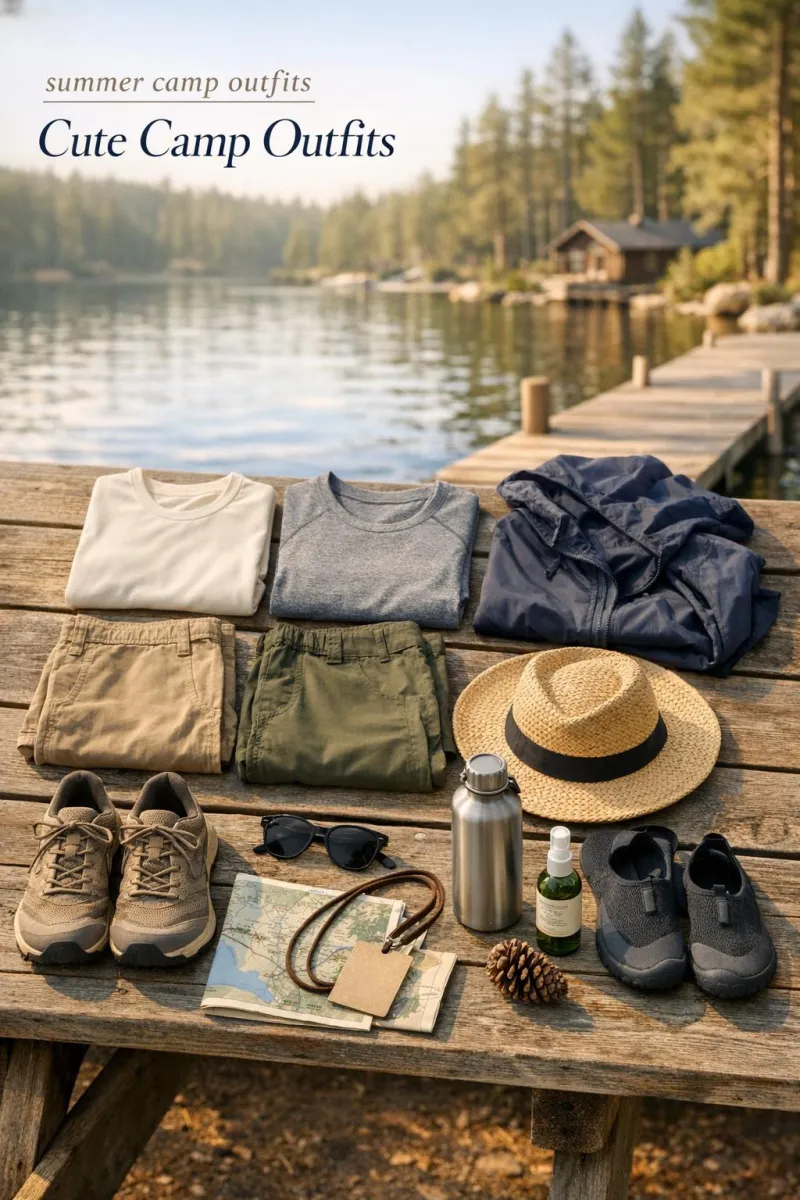
Photo: minimalist camp wardrobe flat lay neutral tones outdoor clothing, via uniqistic.com
Open your closet right now. Not to grab something — just to look. How much of what's hanging there actually feels like you?
If you're honest, probably less than half. Maybe a lot less. Most of us have closets that are archaeological sites of who we thought we'd become: the blazer for the job interview confidence, the dress for the summer we were going to be more adventurous, the hoodie from a place we visited once and wanted to keep feeling connected to.
Camp kids have always understood something that the fashion industry spends billions trying to obscure: the best outfit is the one you don't have to think about. And the only way to get there is to build something intentional.
Why Camp Dressing Works
There's a reason the camp uniform — graphic tee, broken-in shorts, worn-soft hoodie, reliable sneakers — feels so freeing. It's not because it's simple. It's because it's decided. The cognitive load of getting dressed drops to nearly zero when your options are limited and every option is one you actually like.
Japanese design philosophy calls this kanso — the principle of eliminating the unnecessary to reveal what's essential. It's the same thinking behind a Muji store and a camp bunk. Strip away the excess, and what's left tends to be surprisingly enough.
But here's where most minimalism advice loses the thread: it focuses on less as the goal. The real goal is meaning. You don't want fewer clothes because fewer is virtuous. You want fewer clothes because every single one you own should be worth keeping.
The Closet Audit: Asking Better Questions
Before you buy anything, you have to be honest about what you already have. This isn't a KonMari exercise in thanking your socks. It's more direct than that.
Pull everything out. Yes, everything. Then ask each item three questions:
1. Do I actually wear this? Not "could I imagine wearing this" or "wore this once at that thing." Do you reach for it regularly, without hesitation?
2. Does it fit my actual life — not my imagined one? A lot of wardrobe regret comes from dressing the life you think you should have rather than the one you're living. If you work from home three days a week and spend weekends hiking or at farmers markets, your wardrobe should reflect that. Not aspirational dinner parties you haven't attended in two years.
3. Does it have a story, or does it just have a price tag? This is the Odaka Camp question. Some clothes mean something — the faded crew neck from the summer that changed things, the canvas jacket you bought on a trip that still makes you feel like you were there. Others are just purchases. Learn to tell the difference.
Anything that fails all three questions goes. Donate it, sell it, let it go. You're not throwing away money — you already spent that money. You're just clearing space for something true.
Building the Five-Piece Core
Once you've cleared the noise, you can start building intentionally. The five-piece formula isn't a rigid rule — it's a framework for thinking about what a wardrobe actually needs to do.
The Base Layer: One or two high-quality, neutral-toned tees or long sleeves that work with everything. Not white (it's the least forgiving color you can own). Think natural tones — oatmeal, slate, moss, washed navy. These are your foundation. Spend more than you think you should on these.
The Outer Shell: A single versatile layer — a heavyweight hoodie, a chore coat, a fleece — that can move between casual and slightly dressed-up contexts. This is your most personal piece. It should feel like armor. It should feel like home.
The Bottom Half: Two pairs of pants or shorts that cover the range of your actual life. Not five variations of the same thing. Two that genuinely work differently and both fit perfectly.
The Signal Piece: One item that says something specific about who you are — a camp tee from a place that matters, a graphic that means something, a hat you earned. This is not decoration. This is identity. Choose carefully.
The Reliable Footwear: Shoes that work for 80% of your life without you having to think about them. Worn-in trail runners, a clean low-top sneaker, a simple boot. The goal is footwear you never question.
Five categories. Maybe eight to twelve actual items. That's a wardrobe.
Styling Across Contexts Without Buying More
Here's what most style guides won't tell you: versatility isn't about having clothes that "work for everything." It's about understanding how context transforms the same item.
Your chore coat over a base layer with trail runners is a Saturday at the trailhead. The same chore coat over a clean button-down with simple leather boots is a dinner out. You didn't change the coat. You changed the conversation it's having.
This is the Japanese concept of ma applied to clothing — the meaning is in the relationship between things, not the things themselves. A camp graphic tee tucked into clean chinos says something different than the same tee un-tucked with cargo shorts. Neither is wrong. But neither is accidental, either.
Wear things with intention and they start doing work for you.
The Odaka Approach to Shopping New
Once you've built your core, the question isn't "what should I add?" The question is "what's missing from the story?"
Shop slowly. When something catches your eye, wait 72 hours before buying. If you're still thinking about it after three days, it might be worth it. If you've forgotten it, it was just noise.
Prioritize natural materials — cotton, wool, canvas, linen. They age better, feel better, and carry the evidence of being worn in a way that synthetic fabrics don't. A cotton tee that's been washed fifty times tells a story. A polyester blend just gets pilly.
And when possible, buy things with a connection to somewhere or something. An Odaka Camp tee isn't just a shirt — it's a marker, a memory anchor, a signal to people who recognize it that you've been somewhere worth going. That's worth more than any fast-fashion equivalent.
Wearing Your Journey
The goal of all of this isn't to look good, exactly. Or at least, not primarily. The goal is to stop using your closet as a graveyard for who you thought you'd be, and start using it as a record of who you actually are.
When you get dressed in the morning and reach for something that fits, that means something, that's been with you through things — that's not just getting dressed. That's a small act of self-knowledge.
And on the days when you're not sure who you are or where you're going, a wardrobe that's honest about your actual life is a surprisingly good place to start.