Knot for Nothing: How Young Makers Are Turning String Into Serious Income
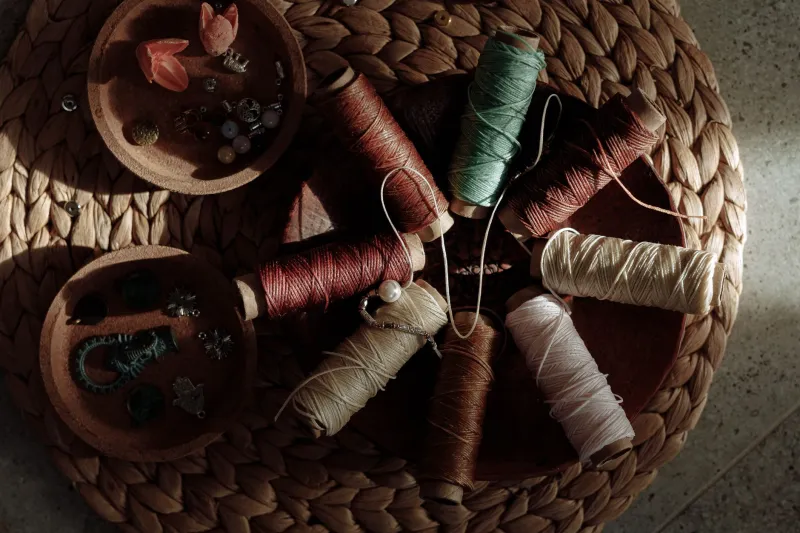
Somewhere between a skein of embroidery floss and a ring light sits the new American side hustle. It's not an app. It's not a dropshipping scheme. It's a friendship bracelet — knotted by hand, photographed on a wooden desk, and listed for $12 on an Instagram shop by a seventeen-year-old who figured out that nostalgia is actually pretty good business.
The numbers back it up. Handmade goods marketplaces have seen sustained growth over the past few years, and bracelet listings specifically have become some of the most-shared, most-saved products in the DIY commerce space. For Gen Z makers, this isn't a hobby that got out of hand. It's a deliberate, values-driven business model — and it's working.
Why Nostalgia Has a Price Tag Right Now
Marketing researchers have a term for what's happening: nostalgic consumption. It's the idea that people — especially younger generations navigating economic anxiety and digital overload — will pay a premium for things that feel emotionally safe and personally meaningful. A handmade bracelet doesn't just look cute on your wrist. It carries the psychological weight of summer camp, childhood friendships, and a simpler version of your life before everything got complicated.
For Gen Z specifically, that nostalgia is particularly potent. Many of them grew up in an era of rapid digital acceleration, where physical, tactile experiences became rarer and therefore more valuable. A bracelet made of actual string, by actual human hands, feels almost radical in a world of algorithm-generated content and AI-designed graphics. That contrast is exactly what's driving sales.
But here's what's interesting: the kids selling these bracelets aren't just accidentally tapping into nostalgia. Many of them are doing it on purpose. They understand that what they're offering isn't just a product — it's a feeling. And they're pricing accordingly.
TikTok as the New Craft Fair
Before platforms like TikTok and Instagram Shops, a teenage maker's distribution options were pretty limited. Maybe a table at a local farmers market. Maybe selling to friends at school. The ceiling was low, and the overhead — in time and logistics — often wasn't worth it.
Social commerce changed that completely. A thirty-second video of hands knotting a bracelet, set to the right audio, can reach hundreds of thousands of people overnight. And the algorithm doesn't care how old you are or whether you have a business license. It cares about engagement, authenticity, and watch time — things a passionate teenage maker has in abundance.
What's emerged is essentially a democratized craft fair that never closes. Young entrepreneurs are learning to shoot product videos, write compelling captions, manage inventory, process payments, and handle customer service — all before they're old enough to vote. The platform is doing something no business school curriculum has managed: teaching real commerce through doing.
The Ethics of Pricing Handmade Work
Here's where it gets genuinely complicated. One of the biggest challenges facing young makers is the pressure to underprice their work. Buyers accustomed to fast fashion economics will balk at paying $15 for a bracelet that took forty-five minutes to make. And because many teen sellers are just happy to make any sale, they often capitulate — setting prices that don't account for materials, time, or the very real skill involved.
But a growing number of young entrepreneurs are pushing back. They're publicly breaking down their pricing in videos and posts, showing exactly what goes into each piece: cost of floss, time spent knotting, packaging materials, platform fees. It's a form of radical transparency that older generations of makers rarely practiced, and it's slowly shifting buyer expectations.
Sustainable pricing in the maker economy isn't just about profit margins. It's about respect — for the maker's time, for the craft itself, and for the idea that handmade things deserve to exist in a market that currently rewards volume over quality. When a sixteen-year-old explains why her bracelet costs more than the mass-produced version at a big box store, she's making an argument that the entire maker economy needs to keep making.
Analog Goods in a Digital World
There's something almost paradoxical about using TikTok — one of the most algorithmically sophisticated platforms ever built — to sell something as low-tech as a knotted string bracelet. But that tension is kind of the point.
The appeal of analog goods isn't despite the digital age. It's because of it. The more time people spend in front of screens, the more they crave something they can actually touch. Something with texture and imperfection and a story behind it. A bracelet made by a real person, shipped in a hand-stamped envelope, carries a kind of meaning that no amount of digital content can fully replicate.
This is the same instinct that's driving people toward handwritten letters, vinyl records, and printed photographs. It's not anti-technology. It's a recalibration — a reminder that some experiences are worth having in physical form.
At Odaka Camp, we've always believed that the things you make with your hands carry something the things you buy with a click never quite can. Call it intention. Call it energy. Call it whatever feels right. But when you wear a bracelet that someone spent an hour making, you're wearing a little piece of their time and care — and that's not nothing.
What the Bracelet Economy Is Actually Teaching Us
Step back from the sales figures and the viral videos for a second, and what you see is a generation of young people choosing to make something real in a world that keeps pushing them toward the abstract. They're learning patience — because knotting takes time. They're learning pricing strategy — because running out of materials mid-order is a hard lesson. They're learning customer relationships — because a repeat buyer is worth more than a viral moment.
And they're learning, maybe most importantly, that their time and skill have value. That's not a small thing. That's the foundation of a healthy relationship with work.
The friendship bracelet economy is built on string and embroidery floss, sure. But it's also built on something harder to source: the belief that what you create with your own hands is worth something — and that someone, somewhere, will recognize that and pay for it.
Turns out, a lot of someones will.