What a Bracelet Made of String Can Teach Kids About the Economy
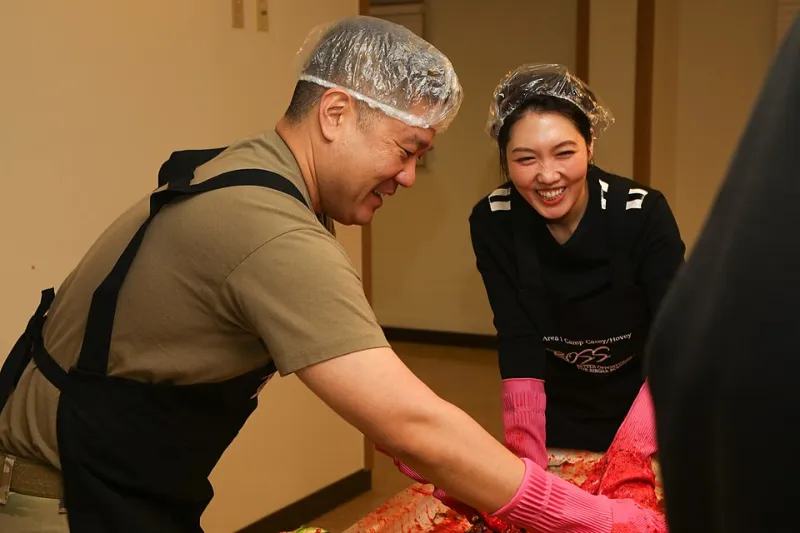
Photo: U.S. Army photo by Pfc. Bryson Walker, Public domain, via Wikimedia Commons
Somewhere between the mess hall and the swimming hole, a quiet transaction is happening. A ten-year-old holds up a chevron-patterned bracelet — teal, orange, and white — and stares down another kid across the picnic table. "I'll trade you for your spiral one," she says. The other kid squints. "Mine took way longer."
And just like that, without a single lesson plan or a whiteboard in sight, two kids are doing economics.
The Oldest Classroom Nobody Talks About
Friendship bracelets have been a camp staple for decades. They're cheap to make, endlessly customizable, and carry a social currency that no store-bought gift can replicate. But spend a few days watching kids actually make and trade them, and you start to notice something that goes way beyond craft time.
They're learning about labor. About scarcity. About subjective value. About the difference between what something costs and what it's actually worth.
Kids figure this out not because someone tells them to, but because they feel it. When you've spent forty-five minutes on a single piece — counting knots, fixing mistakes, choosing colors — handing it away for something that took ten minutes feels wrong. That instinct? That's the labor theory of value in action. And they got there on their own.
Counselors at camps across the country have noticed this dynamic for years. "The bracelet economy is real," says one veteran counselor from a sleepaway camp in Vermont who has worked with kids ages eight through fifteen for over a decade. "I've watched full-on negotiations happen. Kids arguing about whose took more time, whose pattern was harder. They're doing math and philosophy at the same time and they don't even know it."
When Handmade Meets the Marketplace
Here's the thing about growing up with Amazon Prime: kids today have almost zero friction between wanting something and getting it. Two taps, two days, done. That's not a moral failing — it's just the world they were handed. But it does mean something important gets skipped: the experience of making something, valuing it, and then deciding what it's worth to give or trade away.
Dr. Alicia Mendez, a behavioral economist who studies how children develop financial intuition, puts it plainly. "When you remove the making process from the exchange process, you lose a huge chunk of economic education. Kids who grow up only consuming never get the chance to ask: what did this cost the person who made it? Not just in dollars, but in time and effort and care."
Friendship bracelets force that question back into the picture. And the answers kids come up with — on their own, at a picnic table, with a pile of floss — are often surprisingly sophisticated.
The Non-Monetary Stuff Is the Real Lesson
What's fascinating is that most bracelet trades at camp don't involve money at all. It's a barter economy, which means kids have to figure out equivalence without a price tag to anchor them. Is a three-color braid worth the same as a five-color chevron? What if the braid took longer? What if the chevron came from your best friend?
Parents who've watched their kids come home from camp and talk about these trades are often surprised by the nuance their kids bring to the conversation. "My daughter came home and told me she'd traded a bracelet she'd worked on for two hours for one that took her friend maybe twenty minutes," recalls one mom from outside Chicago. "But she said it was worth it because her friend had picked the colors specifically for her. I was like — she just described sentimental value. At nine years old."
That distinction — between market value and personal value — is one adults spend careers trying to understand. And yet it emerges naturally when you sit kids down with string and let them figure it out.
What Negotiation Looks Like Without Stakes
One of the underrated gifts of the camp bracelet economy is that the stakes are low. Nobody's losing their house. Nobody's going into debt. The worst that happens is you feel like you got a bad trade and you're a little bummed about it for an afternoon. That low-stakes environment is actually the ideal place to practice negotiation, according to educators who specialize in social-emotional learning.
"Kids need practice making deals, advocating for themselves, and sometimes walking away from something that doesn't feel fair," says a middle school teacher from Oregon who also runs a summer enrichment program. "Friendship bracelets give them that practice in a context where the emotional investment is real but the consequences are manageable. That's gold."
There's also the social layer. Unlike a cash transaction, a bracelet trade happens between two people who have a relationship — or are building one. That means fairness matters in a way it doesn't at a checkout counter. Kids learn quickly that ripping someone off in a trade can cost you a friendship. Another lesson that doesn't show up in any financial literacy curriculum.
Bringing It Home
So what happens when summer ends and the bracelet-making tables get put away? The trick is finding ways to keep that economic intuition alive once kids are back in a world where everything is a click away.
Some families make a ritual of it — keeping a craft basket stocked with embroidery floss, letting kids make gifts for birthdays instead of buying them, or encouraging them to sell handmade items at school craft fairs. Others just make a point of talking about the labor behind the things they buy. Who made this? How long did it take? What's it actually worth?
Those conversations, small as they seem, build something that no financial literacy app can quite replicate: a felt sense of value. The understanding that things cost something beyond money — time, attention, skill, care — and that the most meaningful exchanges often can't be measured in dollars at all.
The Knot That Holds It Together
At Odaka Camp, we think about this a lot. The merchandise we put into the world — the bracelets, the patches, the pieces made with intention — they carry a story. And part of what we're trying to do is remind people, young and not-so-young, that the story matters as much as the object.
A two-dollar friendship bracelet knotted at a picnic table isn't just a bracelet. It's a record of someone's time and care and decision to give it to you specifically. That's not nothing. In a lot of ways, that's everything.
Maybe the real economy lesson isn't about money at all. Maybe it's about learning to notice what things are actually made of — and honoring the hands that made them.