Made by Hand, Meant to Last: The Rise of the Small Maker Economy
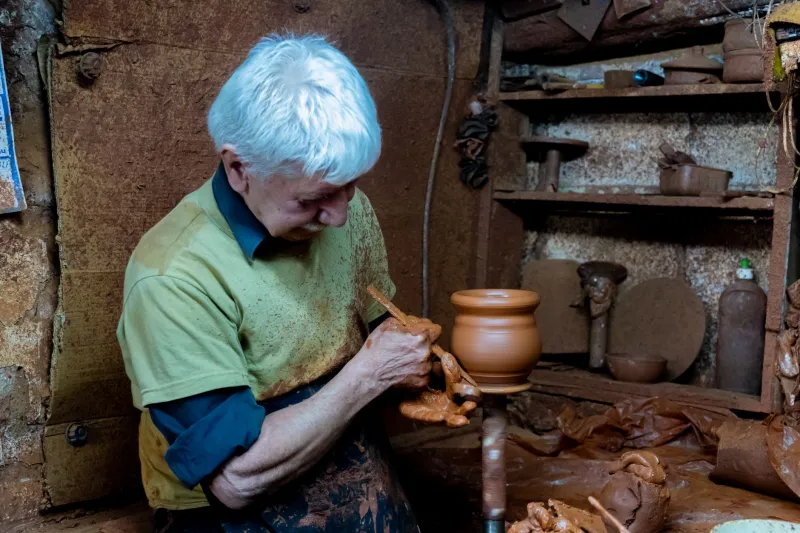
There's a mug sitting on a shelf in a cabin in the Catskills. It's slightly lopsided, glazed in a color that doesn't have an official name, and it holds coffee like it was born to do exactly that. The woman who made it lives two counties over and sells maybe forty of them a year. That mug cost $38. A nearly identical one at a big-box store costs $6.99.
And yet — people keep buying the $38 one.
This isn't a niche phenomenon anymore. Across the country, something is changing about the way people decide what's worth their money. Farmers markets are packed. Etsy storefronts are doing real business. Independent craft fairs book out their vendor spots months in advance. The handmade economy isn't just alive — it's growing, and the psychology behind it turns out to be pretty fascinating.
The Problem with Perfect
Mass production is good at one thing: consistency. Every item that rolls off a factory line looks exactly like the last. The stitching is uniform, the glaze is even, the dimensions are precise to the millimeter. For a long time, that was the whole point. Consistency meant quality. Uniformity meant progress.
But somewhere along the way, that sameness started to feel hollow.
Researchers who study consumer behavior have a term for it — the "mass production aversion." Studies out of Yale and Harvard Business School have found that people actually perceive handmade goods as tasting better, feeling better, and being worth more money, even when the physical product is identical to a factory-made version. The human touch, it turns out, transfers something intangible. Call it intention. Call it care. Whatever you call it, people can feel it.
Jordan Alvarez, a ceramicist based out of Taos, New Mexico, puts it simply: "When someone buys one of my bowls, they're not just buying a bowl. They're buying the two hours I spent at the wheel, the decisions I made about the shape, the glaze I mixed by hand. That's in there. You can't replicate that at scale."
What the Numbers Actually Say
The global handmade goods market was valued at over $700 billion in 2023, and analysts expect it to keep climbing well into the next decade. In the US specifically, consumer interest in "artisan," "handcrafted," and "small-batch" products has surged across categories — food, clothing, home goods, jewelry, skincare, you name it.
The pandemic had a lot to do with it. When supply chains broke down and big retailers couldn't deliver, small makers stepped up. People started buying directly from local potters, sewers, candle makers, and woodworkers. And when the shelves restocked and the supply chains healed, a lot of those customers didn't go back. They'd discovered something they hadn't expected: a relationship.
Buying from a small maker means you can actually ask where something came from. You can message the person who made your jacket and find out what kind of thread they use. You can follow a woodworker on Instagram and watch the cutting board you ordered go from raw walnut slab to finished product. That transparency is addictive once you experience it.
The Environmental Math
It's not just emotional — there's a real environmental case to be made here, too. Fast fashion alone accounts for roughly 10% of global carbon emissions. Factory goods are often produced with cheap materials designed to break down quickly, fueling a cycle of constant replacement. The disposable economy isn't just aesthetically unsatisfying; it's genuinely wasteful.
Handmade goods tend to be built differently. Small makers typically use higher-quality materials because they're producing fewer items and can afford to be selective. They're more likely to source locally, use natural materials, and create things designed to last for years rather than seasons. A well-made leather belt from an independent craftsperson doesn't end up in a landfill after two years. It gets better with age.
Mia Chen, who runs a textile studio out of Portland, Oregon, describes her philosophy this way: "I make things I'd be embarrassed to see thrown away. That keeps me honest about every choice — the fabric, the dye, the hardware. If I wouldn't want to find it in a dumpster in five years, I don't use it."
How to Find the Real Thing
The trickiest part of supporting the handmade economy is learning to spot authentic makers in a world full of "handcrafted" marketing language. Big brands figured out fast that the aesthetics of artisan goods move product, so they borrowed the vocabulary. Here's how to cut through the noise:
Look for a real person behind the product. Authentic small makers almost always have a face, a name, and a story attached to their work. If you can't find out who actually made the thing you're buying, that's a red flag.
Ask about materials and process. Genuine craftspeople love talking about their process. If a brand is vague or evasive about where their materials come from or how something is made, it's probably not what it's claiming to be.
Expect slight variation. Handmade means handmade — no two pieces will be exactly alike. If every item in a "handcrafted" line looks factory-perfect, it probably was.
Support curated platforms and stores. Marketplaces and shops that do the vetting work for you — verifying that makers are actually making — save you a lot of guesswork. Look for places with editorial standards, not just open marketplaces.
Buy less, buy better. The handmade economy runs on the opposite logic of fast fashion. Instead of buying five cheap versions of something, buy one excellent version from someone who put real work into it.
What You're Really Investing In
At its core, choosing handmade is choosing a different kind of relationship with the objects in your life. It's a vote for slowing down, for paying attention, for valuing the story behind a thing as much as the thing itself.
There's something deeply camp about that, actually — in the Odaka sense of the word. Camp has always been about stripping away the excess, getting back to what's real, and finding meaning in simplicity. A handmade bracelet knotted around a wrist, a hand-thrown mug that holds your morning coffee, a woven bag that gets better with every trip — these things carry weight that a barcode can't assign.
The campfire economy isn't about rejecting modernity. It's about being deliberate. It's about knowing where your stuff comes from, who made it, and why that matters.
That $38 mug from the Catskills? It's still on the shelf. Still slightly lopsided. Still perfect.