Woven Trust: How Gen Z Turned a Camp Craft Into the Most Honest Currency in Their Social World
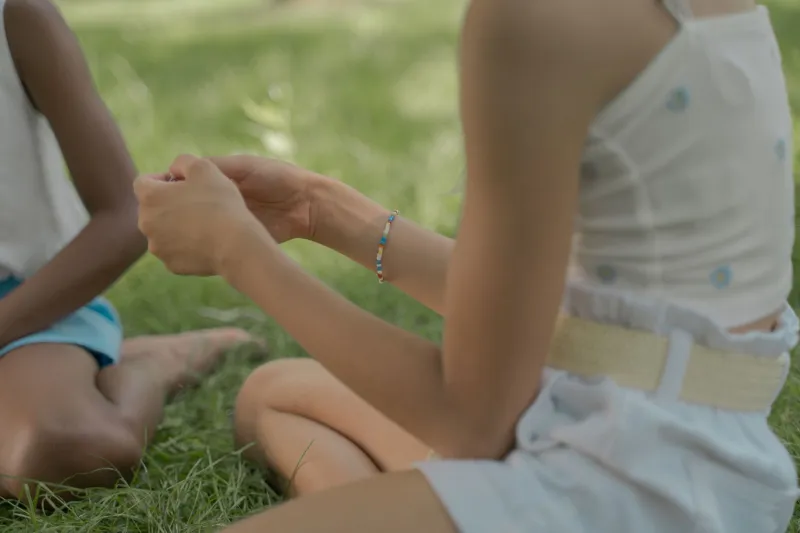
Somewhere between the end of a concert and the beginning of a friendship, someone unclasps a bracelet from their own wrist and hands it to a stranger. No transaction. No expectation of anything in return. Just embroidery thread, a few hours of someone's time, and an unspoken agreement: I made this, and now it's yours.
If that sounds sentimental, you haven't been paying attention to what Gen Z has been doing with camp culture.
The Old Tradition, Rewired
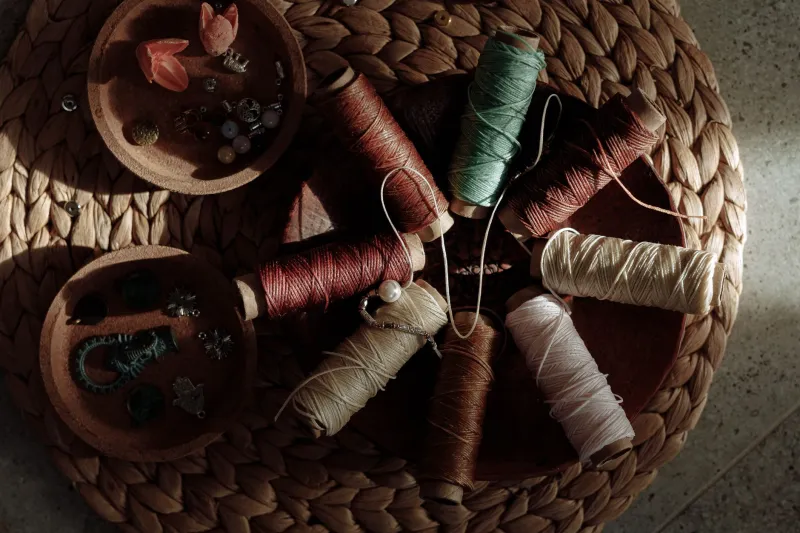
Friendship bracelets have been a summer camp staple for generations. The basic formula hasn't changed much: pick your colors, learn your knots, spend a rainy afternoon hunched over a clipboard making something for someone you care about. The bracelet itself almost doesn't matter. What matters is the time, the intention, and the act of giving.
Gen Z didn't invent that. But they've done something interesting with it: they've scaled the ritual without losing what makes it meaningful, and they've deployed it in contexts that go far beyond the arts-and-crafts cabin.
At concerts, sporting events, community meetups, and even protest gatherings, handmade bracelets are being exchanged as a kind of social vocabulary. The practice exploded into mainstream visibility during the Eras Tour phenomenon, when fans showed up with hundreds of bracelets to trade — but the behavior was already well established in underground music scenes, fan communities, and friend groups long before that.
What's changed isn't the bracelet. It's what it means to give one.
Why Handmade Hits Different in a Digital World
Here's the tension Gen Z is living inside: they're the most digitally connected generation in history, and also one of the loneliest. Rates of social isolation among young adults have been rising steadily for over a decade. They have more ways to communicate than any previous generation, and many of them report feeling less genuinely known.
In that context, a handmade object carries a kind of weight that a DM or a like simply can't. It's proof of time. You can't automate it, mass-produce it, or fake the hours it took. When someone hands you a bracelet they made themselves, they are communicating something that the entire infrastructure of social media is structurally incapable of communicating: I thought about you when you weren't there.
Psychologists who study gift-giving behavior note that handmade gifts consistently outperform purchased ones in terms of perceived thoughtfulness and emotional impact — even when the handmade version is technically less impressive. The effort signals something. And for a generation that has grown up surrounded by content optimized to look effortless, actual effort is radical.
The Economics of Giving (Not Selling)
Here's where it gets philosophically interesting. The friendship bracelet economy — and it is, in a real sense, an economy — runs almost entirely on giving rather than exchange. The bracelets have value precisely because they aren't sold. The moment you put a price tag on one, something essential evaporates.
This is a concept that economists and anthropologists have studied in the context of what's called a "gift economy" — a system where goods circulate based on generosity and social obligation rather than market price. Gift economies build community in ways that market economies can't, because every gift creates a relationship. The transaction isn't just about the object; it's about the bond that the object creates and represents.
Gen Z, perhaps intuitively, seems to understand this. The bracelets they trade aren't commodities. They're social contracts. They say: I am a person who makes things. I am a person who gives. I am a person who values connection over efficiency.
In an era of influencer marketing and sponsored content, that kind of authenticity is genuinely scarce — and therefore genuinely valuable.
What the Bracelet Is Actually Saying
Spend time in spaces where bracelet trading happens and you start to notice that the exchanges are rarely random. There's usually a moment of recognition first — a shared reference, a mutual laugh, a conversation that goes somewhere real. The bracelet comes out as a kind of punctuation mark. This mattered. Here's proof.
The colors people choose aren't arbitrary either. Gen Z has developed an informal but remarkably consistent visual language around bracelet design: certain color combinations signal specific fandoms, values, or identities. Some people make bracelets that spell out words or names. Others incorporate charms, beads, or symbols that carry personal meaning. The bracelet is a text, and reading it requires knowing the person who wrote it.
That's not craft. That's communication.
Camp as the Original Template
What's worth noting — and what feels deeply on-brand for anyone who's spent time at a summer camp or retreat — is that none of this is new. The emotional logic of the friendship bracelet has always been the same: use your hands to make something, give it freely, and let the object carry meaning that words can't quite hold.
Camp taught generations of kids that the most important things aren't bought. They're made. They're given. They're worn until they fall apart, and even then, you remember exactly who gave them to you.
Gen Z didn't invent that lesson. They just remembered it at exactly the right moment.
The Takeaway for the Rest of Us
You don't have to be nineteen and front-row at a stadium show to participate in this. The impulse behind bracelet trading — the desire to give something real, something made, something that costs time instead of money — is available to anyone willing to pick up a spool of thread.
At Odaka Camp, we keep coming back to the idea that the most meaningful things are often the simplest ones. A knot. A color. A wrist you reach across to. The friendship bracelet economy isn't really about bracelets at all. It's about what happens when people decide to treat each other like they're worth the effort.