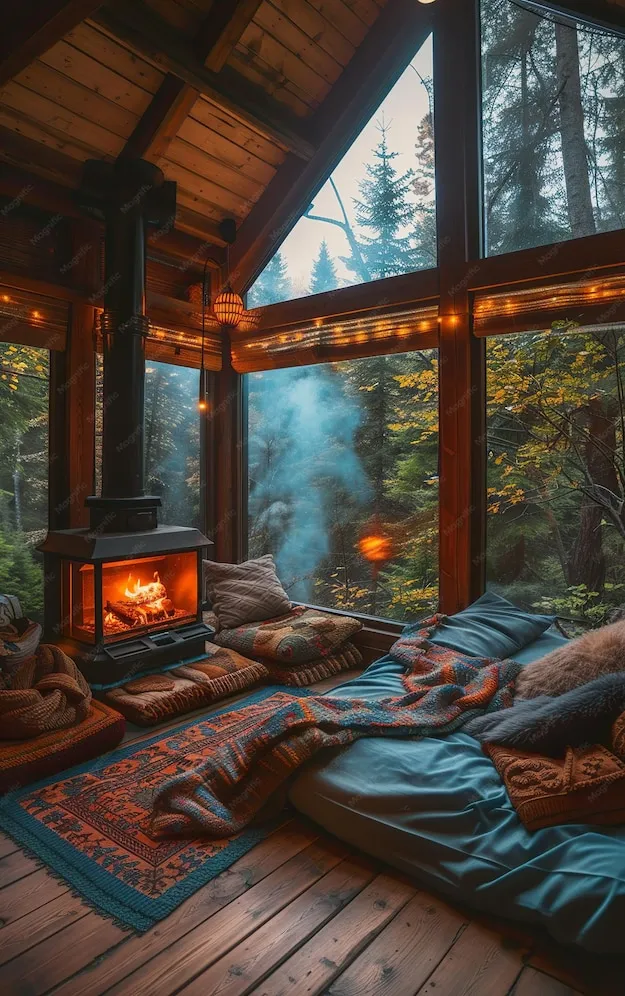
No Signal, No Small Talk: How the Bonfire Became the Greatest Conversation Hack Ever Invented
Somewhere between the s'mores and the smoke drifting into your hair, something shifts. The group of strangers you arrived with — the ones you politely nodded at over dinner — are suddenly telling you things they haven't told their therapists. You're laughing harder than you have in months. You're actually listening. Not half-listening while you scroll. Actually listening.
This isn't magic. It's design. And once you understand why it works, you can start building it into your real life.
The Invisible Architecture of Camp
Camp life is, at its core, a series of deliberate constraints. No phones buzzing with notifications. No separate rooms to retreat to. No algorithm serving you content tailored to keep you isolated and entertained. Instead, there's a fire pit, a circle of logs, and the shared understanding that this is the place to be right now.
Psychologists call this kind of setup a "high-constraint environment" — and research consistently shows that when people have fewer escape routes, they invest more deeply in the social situation in front of them. It sounds almost counterintuitive in a culture that prizes freedom and optionality above everything. But the paradox is real: more choices often lead to shallower engagement. Fewer choices force presence.
The bonfire doesn't just remove distractions. It provides what behavioral scientists call a shared focal point — something everyone is oriented toward together. Fire is ancient technology for exactly this purpose. It's warm, it's hypnotic, and it levels the social playing field. CEOs and counselors-in-training stare into the same flames.
Why Forced Proximity Isn't Actually Awkward
There's a concept in social psychology called the "mere exposure effect" — the more time we spend around someone, the more we tend to like them. Camp accelerates this process dramatically. You eat with the same people, hike with the same people, sit around the same fire with the same people. By day three, you've logged more hours with your cabin crew than you might log with a coworker in six months.
But it's not just quantity of time. It's the quality of the shared experience. Psychologists who study friendship formation have found that vulnerability and novelty are two of the fastest pathways to genuine connection. Camp delivers both by the truckload. You're doing things you've never done before. You're sleeping in a bunk bed at forty-two years old. You're slightly uncomfortable, slightly out of your element — and so is everyone else. That shared vulnerability is a social lubricant unlike anything a networking happy hour can manufacture.
The bonfire is where this all crystallizes. Darkness reduces self-consciousness. Firelight is famously flattering. The ambient crackle fills silences that might otherwise feel awkward. The conversation finds its own rhythm, and nobody's checking the time.
The Always-On Problem
Contrast all of this with how most of us spend our evenings. We're physically present in a room with people we love, and mentally scattered across six different apps. The average American checks their phone 96 times a day — roughly once every ten minutes. That's not a recipe for deep conversation. That's a recipe for a series of interrupted half-exchanges that leave everyone feeling vaguely unsatisfied.
The problem isn't that we don't want connection. Every piece of data suggests we're lonelier than ever and desperately craving it. The problem is that we've optimized our environments for distraction rather than for depth. We've removed the constraints that used to force us to be present with one another.
This is what we're really mourning when we get nostalgic about camp. Not the bug spray or the questionable cafeteria food. We're mourning the conditions that made real conversation feel effortless.
Building Your Own Bonfire Conditions
Here's the good news: you don't need a lakeside retreat to recreate what the bonfire does. You need intention and a willingness to impose a few strategic limits.
Try a Digital Sabbath. Pick one evening a week — Friday night works well — and make it phone-free. Not phone-in-another-room. Phone-in-a-drawer, ringer off, truly out of reach. Light some candles. Put on a record. Cook something together. The first twenty minutes might feel restless. Push through. What comes after is worth it.
Designate a Gathering Space. The bonfire works partly because everyone knows that's the spot. Create your own version. A fire pit in the backyard is ideal, but a specific corner of the living room with comfortable seating and no TV in eyeline works too. The point is to have a place that signals: this is where we come to actually talk.
Introduce a Ritual. Camp gatherings work because they're predictable. Same time, same place, same general vibe. Start a standing Sunday dinner. A monthly backyard fire with neighbors. A weekly walk with a friend where phones stay in pockets. Rituals reduce the activation energy required to show up. When something is already scheduled, you don't have to decide to do it — you just do it.
Embrace the Awkward Pause. One of the reasons we reach for our phones is to escape the discomfort of silence. But silence is often where the good stuff lives. It's the pause before someone says something they actually mean. Practice letting silences breathe.
What Odaka Knows
At Odaka Camp, we believe that stillness isn't passive — it's something you actively create. The gear we wear and the rituals we carry with us are reminders of a different pace, a different quality of attention. The camp aesthetic isn't just nostalgia. It's a philosophy: that the best experiences happen when you strip things back, show up fully, and let the fire do the rest.
You don't have to wait for summer. The bonfire is a mindset. Build it wherever you are.