Why Your Best Self Showed Up at Camp — And How to Make Sure It Comes Home With You
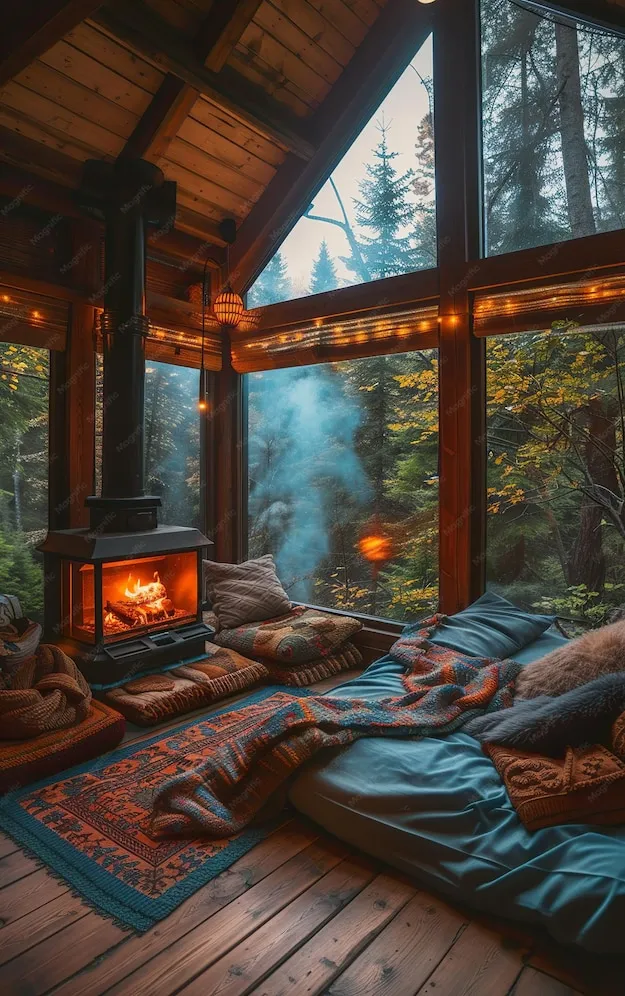
Photo: cozy morning ritual campfire coffee outdoors peaceful wellness routine, via img.freepik.com
Ask almost any American adult about their best summer and odds are decent that camp shows up in the answer. Not because camp was perfect — the bug spray, the bunk beds, the inexplicable camp food — but because of how it felt to live inside a structure that made sense. Wake up. Move your body. Eat together. Make something. Sit around a fire. Sleep when it's dark.
For two weeks, you weren't managing your life. You were living it.
Then you came home, and within forty-eight hours, the inbox had you back.
The Problem With Treating Ritual Like a Vacation
Here's the uncomfortable truth about how most of us approach wellness: we treat it like a destination. We save it for the annual retreat, the summer trip, the "I'll start Monday" reset that never quite takes hold. We compartmentalize restoration the same way we compartmentalize everything else — into a discrete block of time that doesn't touch the rest of our calendar.
Camp works, in part, because it doesn't do this. The rituals aren't scheduled around your life. They are your life, at least for a little while. The morning swim isn't optional self-care. It's just what happens at 7 a.m. The campfire isn't a team-building exercise. It's where you end up every night, without thinking about it, because that's what people do when the sun goes down.
Repetition plus meaning equals ritual. And ritual, unlike routine, actually changes you.
Routine is what you do on autopilot. Ritual is what you do with intention. The difference is small but enormous. Brushing your teeth is a routine. Sitting outside with your coffee before anyone else wakes up, watching the light change, and refusing to look at your phone — that's a ritual. Same amount of time. Completely different effect on your nervous system.
What Camp Gets Right That Wellness Culture Often Gets Wrong
The American wellness industry is worth somewhere north of $1.5 trillion globally, and yet burnout rates keep climbing. That's not an accident — it's a symptom of treating wellness as a product rather than a practice.
Camp, for all its simplicity (or because of it), sidesteps this trap. The rituals that make camp feel restorative aren't expensive or complicated. They're consistent, embodied, and shared.
Consistent means they happen whether you feel like it or not. The flag goes up in the morning. The bell rings for meals. The fire gets lit at dusk. There's something quietly liberating about not having to decide.
Embodied means they involve your physical self — not just your thoughts or your screen. Swimming, hiking, sitting on actual ground, sleeping under actual darkness. Your body knows things your brain has been too loud to hear.
Shared means they happen with other people, in real time, without a content strategy. You're not documenting the campfire. You're just at the campfire.
Most mainstream wellness content hits one of these three. Camp hits all of them, every day, by design.
Building Your Own Micro-Retreat: A Realistic Approach
The goal isn't to turn your apartment into a campsite or your Tuesday into a wilderness experience. It's to identify the architecture of what made camp feel different and find honest, sustainable ways to build it into your existing life.
Here's what that can look like in practice:
Create a morning anchor. Camp mornings have a quality to them — cool air, slow pace, something physical before anything digital. You can replicate this without a lake. Step outside before you check your phone. Even five minutes on a porch or a stoop, with coffee or without, establishes that the morning belongs to you first. Make it non-negotiable. That's what makes it a ritual.
Designate a technology-free hour. Not forever. Not a digital detox retreat you'll never actually do. One hour, ideally in the evening, where the devices go in a drawer. Light a candle. Read something physical. Talk to whoever's home. The specific activity matters less than the boundary. The boundary is the ritual.
Build a weekly fire moment. This doesn't require a fire pit. It requires a version of the campfire's function — a gathering point, a signal that the productive part of the day is over, a space where conversation can wander. For some people it's a Sunday dinner with no phones at the table. For others it's a Friday evening walk. The shape of it is yours. The intention is the same.
Wear the thing that puts you in the mindset. This sounds small, but it isn't. Part of what makes camp feel distinct is that you dress differently there. You're in your camp hoodie, your worn-in tee, your broken-in shoes. These objects carry association — they signal to your brain that you're in a different mode. At Odaka Camp, we think a lot about this. The right piece of merch isn't a souvenir. It's a touchstone. Something you reach for on a Sunday morning when you want the day to feel like it belongs to you.
The Deeper Argument
There's an opinion embedded in all of this, and it's worth saying plainly: the rituals that make us feel most like ourselves shouldn't be rationed to two weeks a year. That's not a luxury problem — it's a design problem. We've built lives with very little structural support for presence, and then we wonder why we feel so absent from them.
Camp, at its best, is a prototype for a different kind of life. Not a simpler life in the sense of having less, but a more intentional one — where the things you do every day carry some meaning, where the morning has a shape, where you end the day having actually been somewhere.
You don't have to go back to camp to feel that way. But you do have to build it, deliberately, into the life you already have.
Start small. Pick one ritual. Protect it like it matters — because it does.
Find your stillness. It was never only at camp.