Buy the Mug, Not the Memory: What a Camp Store Teaches You About the Trip You Needed
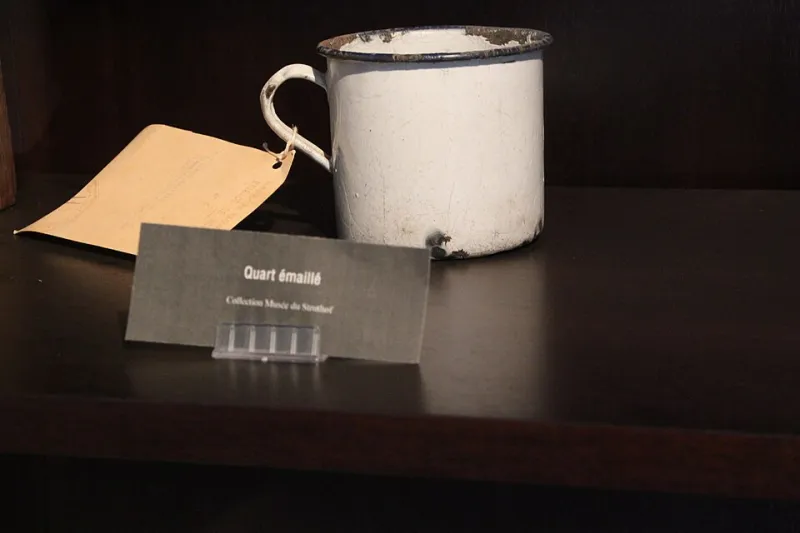
Photo: Lionel Allorge, CC BY-SA 3.0, via Wikimedia Commons
There's a particular kind of person in every camp store on the last morning of a session: standing in front of a rack of hoodies, holding two of the same size, doing math that has nothing to do with money.
They aren't deciding which hoodie. They're deciding which version of themselves they're going to try to be once they get home, and whether this is the object that helps.
The camp store is usually treated as an afterthought — overpriced granola, a lost-and-found bin, some merch. In reality it's the most emotionally honest retail environment in America for about six hours a week.
The Last-Day Ledger
Here's what's actually happening in that moment. You've just spent a week (or a weekend) inside a version of life with different rules: less phone, more people, no ranking, meals at the same time every day. You are, briefly, someone you like better.
Then you have to go home. And home is not that. Home is laundry, a job, and a group chat you've been ignoring.
So you buy something. And the thing you buy is a note to your future self, written in the only language available at the register: merchandise. The mug says I make coffee slowly now. The hoodie says I'm a person who sleeps outside. The patch says something narrower and more honest — I was there, it mattered, please don't let me forget.
That's not shallow. That's consumer psychology doing what it does. We buy objects to hold identities we can't quite hold on our own yet.
It's also the easiest thing in the world to get wrong.
Souvenirs Die on Shelves
American souvenir culture trains us to buy proof. Proof of the trip, for other people: the shot glass, the fridge magnet, the keychain shaped like the state.
Those objects were never meant to be used. They were meant to be displayed, and display is a shallow form of remembering. Watch what happens to them. The magnet goes on the fridge and becomes invisible within a week. The shot glass joins eleven other shot glasses in a cabinet. The T-shirt gets worn twice, becomes a sleep shirt, then becomes a rag — which is honestly the most dignified outcome of the three.
The object didn't fail. It was given the wrong job.
Omiyage: A Different Job for a Purchased Thing
Japanese travel culture has a parallel tradition with a completely different structure. Omiyage — the gifts you bring back for coworkers, family, neighbors — are usually food, usually regional, and usually bought in quantity. The point isn't to prove you had fun. It's to maintain the web of relationships you stepped out of for a few days.
Notice what that does to the object. An omiyage is designed to be given away, consumed, and talked about. It moves. It travels again. It comes with a sentence of explanation — where it's from, why this one — and that sentence is the real gift.
The box of sweets disappears in an afternoon, and everyone remembers that you went somewhere and thought about them. The object did its work and then it was gone. Nothing is sitting in a cabinet.
That's the test worth stealing.
Three Questions Before You Buy the Thing
1. Does it do work? Not "is it nice." Work: does it get worn, used, filled, carried, opened? A mug that holds your first coffee. A bandana that lives in your gym bag. A tee soft enough that your hand reaches for it without deciding. If an object's only function is being looked at, it's decoration with a story taped to it.
2. Does it name something that exists on a Tuesday? The camp version of you is real, but it's a compressed version. The question is whether the object translates. A heavy blanket that makes your apartment feel like a cabin at 9 p.m. on a Wednesday translates. A hat that only works when you're in a good mood does not.
3. Would you buy it if nobody saw the photos? This one is brutal, and it's the whole game. If the object's purpose is to signal to other people that you had an experience, it's a souvenir. If you'd want it in an empty room, it's a tool.
What We Try to Put on the Table
Odaka Camp sells merch, so apply the appropriate grain of salt — but the catalog runs on a bias, and the bias is that fewer, heavier objects beat a drawer full of light ones.
A garment-dyed tee you wear until the collar goes soft. An enamel mug that chips and keeps working. A patch you sew onto a jacket yourself, badly, with thread that doesn't match. A bandana that ends up in a pocket instead of a frame. The pitch isn't nostalgia. It's that the object should live in the room where your real life happens, doing a small job, reminding you by proximity instead of by plaque.
We'd rather you buy one thing and wear it out than four things and shelve them.
The Store Is Asking You a Question
Next time you're standing in a camp store — or a museum gift shop, a trailhead kiosk, the merch table at a retreat — slow down for ten seconds and answer honestly.
What did this week give you that you're afraid of losing? Then buy the object that will still be doing that job in April.
The mug. Buy the mug. But buy it because you're going to use it every single morning, and because the handle fits your hand, and because somewhere around the two hundredth cup you'll stop noticing it as a souvenir and start noticing it as your mug.
That's the trip you actually needed. It's the one that survives.